Xiamen Lith Machine Limited is a technology-based enterprise, integrating R&D, manufacturing, sales and service. Our company has strong scientific research strength, including more than 20 senior mechanical and electrical engineers, 8 external experts and professors, and more than 160 front-line technical workers.
Microwave Sintering Furnace: Advanced Thermal Processing Technology for High-Performance Materials
A Microwave Sintering Furnace is an advanced thermal processing system designed to utilize microwave energy as the primary heating source for sintering, densification, and structural modification of a wide range of materials. Compared with conventional resistance or gas-fired furnaces, microwave sintering technology offers significant advantages in heating efficiency, temperature uniformity, processing time, and energy consumption. As a result, it has become an increasingly valuable tool in industries such as ceramics, metallurgy, advanced composites, powder metallurgy, electronic materials, and functional materials research.
The core operating principle of a microwave sintering furnace is the direct interaction between microwave electromagnetic waves and the material’s molecular structure. When exposed to microwave radiation, polar molecules and ions inside the material oscillate rapidly, producing heat internally through dielectric loss. This volumetric heating mechanism contrasts sharply with traditional furnaces, where heat is transferred from the surface toward the center. With microwaves, the entire body of the material can be heated simultaneously, resulting in significantly accelerated sintering kinetics and improved microstructural uniformity.
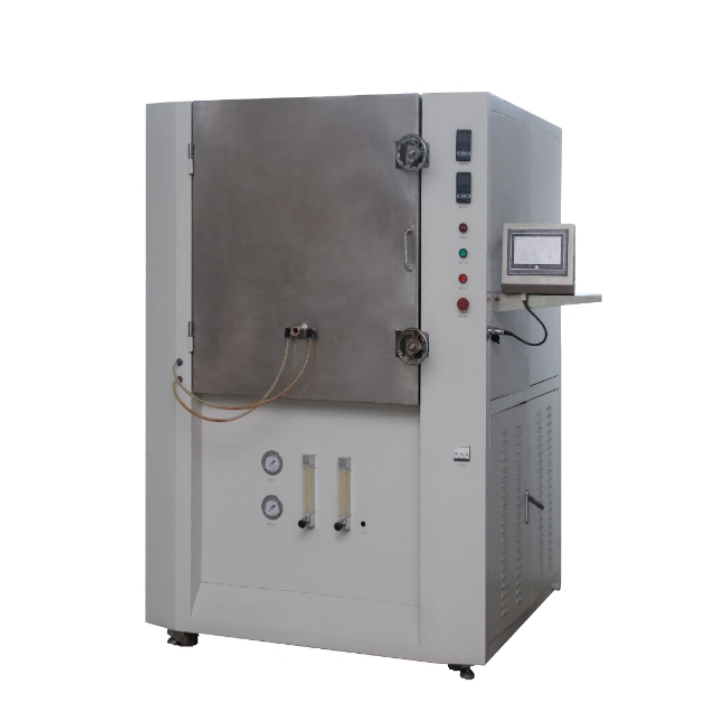
A typical microwave sintering furnace consists of several key components: a microwave generator, usually based on magnetron or solid-state technology; a waveguide system that directs microwave energy into the chamber; a thermal insulation chamber designed to withstand high temperatures; a high-purity refractory muffle or cavity; a temperature measurement and control system; and atmosphere control equipment for enabling inert, reducing, or vacuum environments. The furnace design ensures stable microwave distribution, optimal thermal insulation, and reliable temperature control, enabling precise regulation of sintering profiles.
One major advantage of a microwave sintering furnace is its ability to achieve rapid heating rates, often exceeding 50–100 °C per minute, depending on the material and equipment configuration. This rapid thermal response reduces overall processing time by 30–70% compared with conventional sintering. Furthermore, microwave heating typically requires less energy because the system heats only the workpiece and not the entire chamber, resulting in significant energy savings and lower operating costs.
Microwave Furnace
Microwave sintering also enhances material properties. The efficient and uniform energy absorption promotes finer grain structures, improved densification, and reduced porosity. For ceramic materials, microwave sintering can achieve higher translucency, better mechanical strength, and improved dielectric properties. In powder metallurgy applications, the technique often leads to higher density, cleaner grain boundaries, and reduced impurity diffusion. Additionally, many advanced composite materials benefit from the ability of microwaves to selectively heat different phases, enabling tailored microstructures and improved performance.
The furnace is widely applied in sintering ceramic components such as alumina, zirconia, silicon carbide, and functional ceramics used in electronics. It is also used for metal and alloy sintering—including stainless steel, titanium alloys, and magnetic materials—as well as for the preparation of catalysts, battery materials, nanomaterials, and rare-earth functional powders. Research laboratories and industrial production lines increasingly adopt microwave sintering because of its ability to deliver high-quality results with shorter cycles and lower environmental impact.
In terms of safety and control, modern microwave sintering furnaces are equipped with programmable temperature controllers, real-time power adjustment systems, and multi-point temperature monitoring to ensure stable operation. Some advanced models incorporate hybrid heating elements, combining microwave and resistance heating to extend working temperature ranges beyond 1600 °C and to improve sintering versatility.
Overall, the Microwave Sintering Furnace represents a significant advancement in thermal processing technology. Its unique volumetric heating mechanism, high energy efficiency, fast processing speed, and improved material performance make it an essential solution for modern materials engineering and manufacturing.

 IPv6 compatible con la red


 Teléfono : +86-592-3926659
 Correo electrónico : gilia@inthelaboratory.com